
The Lively Blog
SIGN UP FOR OUR
Newsletter
Stay up to date on the latest news delivered straight to your inbox
What Employers Need to Know About AI in Health Benefits
Lively Team · March 27, 2026 · 10 min read
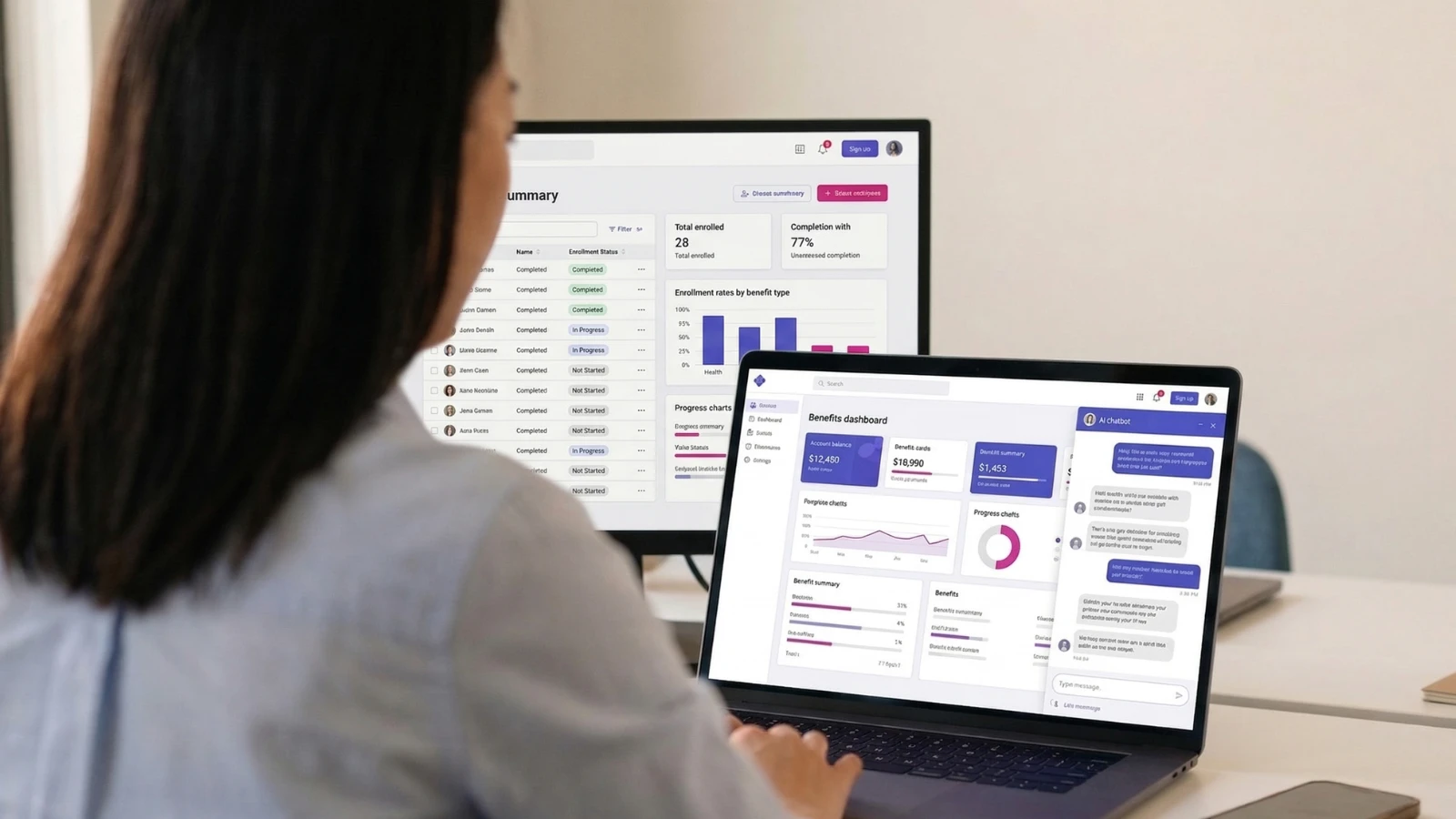
AI is everywhere right now. Every industry, every product launch, every conference keynote. But for the average employee trying to figure out how to pay for a doctor's visit, the conversation around AI feels disconnected from their reality. They're standing at a pharmacy counter wondering if their HSA covers this prescription. They're staring at an open enrollment screen with no idea which plan to pick. They're Googling "what's the difference between an FSA and an HRA" for the third year in a row.
These are the moments where benefits either work or they don't. And increasingly, AI is the thing that determines which one it is.
We sat down with our Co-Founder and COO, Shobin Uralil, to talk about how AI is changing the day-to-day reality of health benefits. Not in theory, but in practice. What we're actually building, what hasn't worked, and where all of this is headed. Shobin's perspective is grounded in operations, not marketing, which made for a refreshingly honest conversation.
Here's what stood out.
AI in benefits isn't what most people think it is
When we asked Shobin what comes to mind for most people when they hear "AI in health benefits," his answer was telling. Most employers and brokers immediately think about the medical plan side: clinical data, provider networks, diagnostics. But the real impact of AI right now is happening somewhere much more practical.
"AI can play a really big role in helping people understand all of those moments of truth just as part of the natural journey that consumers go through when they're seeking out the care that they need and figuring out how to pay for it," Shobin said.
Those moments of truth are the points in someone's care journey where they need to make a decision and don't have the information to make it confidently. Do I have enough in my account? Does my plan cover this? What's the smartest way to pay for this appointment?
These aren't edge cases. They're the everyday reality for most employees. And traditionally, the answer has been to dig through a PDF, call a support line, or log into a portal and hope you click the right thing. None of which happens when you're standing in a doctor's office with your phone in your hand.
What it actually looks like inside Lively
Lively's approach is built around what Shobin describes as "agentic AI," and the distinction matters. This isn't a basic chatbot that links you to a help article. As Shobin explained, "Rather than clicking around in a lot of different places, they can come and chat with our agentic AI, which will go and do all of that work for them and give them the answer they need that is very specific to the situation that they're in."
In practice, that means the AI can pull a member's real-time account balances across their HSA, FSA, and HRA, understand what they're asking, and tell them exactly how much they have available, whether something is an eligible expense, and how to pay for an upcoming appointment. The difference is the gap between a 20-minute research project and a five-second conversation. As Shobin put it, the goal is "giving them time back to focus on the thing that matters, which is seeking their care."
On the employer side, the challenge looks different but is equally stubborn: helping employees make good benefits decisions in the first place. Shobin pointed out that employers invest significant time and effort curating their benefits packages, but when employees are confused or don't understand what they're getting, they simply don't enroll.
Lively built a tool called LivelyIQ to address this. Employees input information about their health needs, location, and lifestyle, and the AI generates a personalized recommendation for which products to enroll in and how much to contribute. Shobin noted that the tool can even factor in uploaded plan documents and claims data to narrow in on the best fit.
The results have been concrete. Employer groups using LivelyIQ saw a double-digit increase in HSA enrollment. "Employers have been really excited about this largely because they put in a lot of time and effort to curating these benefits," Shobin said. "But then when employees are either confused or don't understand what they're getting, it results in people not utilizing them, not enrolling in them."
What didn't work (and why that matters)
Here's where the conversation got interesting. When we asked Shobin about what hasn't gone according to plan, he didn't dodge it.
"We're not afraid of putting something out there, collecting data, and then continuously improving it to make sure that that member experience is nothing but positive," he said.
Lively's agentic chatbot didn't start out at the level it's at today. In its early iterations, the AI would sometimes give answers that lacked the necessary context. For a tool handling sensitive benefits questions, that's not just a bad user experience. It's a trust issue. But rather than pull back, the team leaned into rapid iteration: deploy, collect data on what's going wrong, and continuously fine-tune. That cycle of improvement has paid off. Today, the chatbot resolves more than 85% of all chat inquiries, a number that keeps climbing as the system learns.
There's another detail worth noting here, because it speaks to how Lively thinks about the AI-human relationship. The chatbot is built to recognize when a member needs human support and connect them seamlessly, without making them jump through hoops to get there. As Shobin explained, "When you want to talk to a human, you don't want to spend any more time answering a whole bunch of questions and getting routed along. You just want that to happen in real time. And that's exactly what we do. We use sentiment-based context to determine if a user wants to connect with a live person vs. waiting for them to tell us that they do."
Privacy and compliance: The hard questions
Benefits data is some of the most sensitive information a company handles. It sits at the intersection of healthcare and financial services, which means HIPAA on one side and financial regulation on the other. So we asked Shobin the question every HR leader is thinking: how do you make sure AI doesn't cross a line?
His answer was pointed. Lively operates in a heavily regulated environment, and the AI tools are built with compliance safeguards baked into the core development process, not added as an afterthought. The way Shobin sees it, it only takes one slip for a company to lose trust with a member or employer. So every process that exists on the human side of the business has been carried into Lively's AI efforts to ensure full regulatory compliance.
Shobin framed this as a feature of operating in a regulated space, not a limitation. The constraints force a level of discipline that makes the AI better and more trustworthy.
The one question every employer should ask their vendor
This was perhaps the most actionable part of the conversation. When we asked Shobin what employers and brokers should be asking about AI when they're evaluating benefits platforms, he had a clear answer: ask whether the AI is built into the company's core infrastructure or bolted on from a third party.
"When you end up leveraging a third party, you are at the behest or mercy of that third party in terms of your experience and what you can do," Shobin said. He explained that the way data is segregated and contained makes a real difference in what a vendor can offer. Companies that don't have AI built into their core are going to be inherently limited in how deeply they can solve complex problems for members and employers.
For high-frequency accounts like HSAs and FSAs, products that employees interact with regularly, this distinction is the difference between a seamless experience and a patchwork one. If the vendor doesn't own the technology, they're often at the mercy of their tech partner's roadmap and limitations. This is especially relevant in an industry where white-label technology is common. Many benefits providers license their platform from another company, which can add friction and limit how quickly they can adapt. (For a deeper look at how white-labeling works in benefits administration, read our guide here.)
The takeaway for buyers: don't just ask "do you have AI?" Ask how it's built, where the data lives, and what happens when something goes wrong. The quality of the answer will tell you a lot.
How users will interact with benefits software
When we asked Shobin to look ahead two or three years, his prediction was bold but specific. "AI is going to transform the entire user interface and user experience model," he said.
Right now, the experience is built around navigation: menus, tabs, dashboards, pages. You click around until you find what you need. Shobin believes that the interaction model is about to shift. The software itself may not go away, but the way people use it will look completely different. As he described it, a user won't need to worry about how a company built its software. They'll just need to know what question they're trying to answer, and the AI will handle the rest.
In practice, that means employees will simply ask a question, whether through a chatbot, a voice interface, or whatever the input method is, and get a direct answer. No clicking through pages, no searching through menus, no training themselves on where to find things.
Imagine starting a new job and instead of sitting through a benefits orientation full of acronyms and slide decks, you just ask: "What's the best way for me to save for my upcoming dental surgery?" The AI looks at your plan, your budget, your account balances, and gives you a straight answer.
That's not science fiction. It's the direction the technology is already moving. And for employers, it means the potential for a meaningful increase in benefits utilization, because the biggest barrier has never been the quality of the plan. It's been the complexity of using it.
The big takeaway
We closed by asking Shobin for the one thing he wishes every employer understood about AI and health benefits right now. He didn't hesitate.
"If you hang on to the way that things have been done in the past, you are going to miss out on tremendous opportunities for clarification and maximization of the utilization of benefits for your employees," he said.
HR teams are being asked to cut costs and do more at the same time. AI can help on both sides of that equation. Employers who adopt early will be in a position to show real results to their leadership: higher employee satisfaction, fewer productivity losses, and a stronger return on the investment they've already made in benefits. The ones who wait risk falling behind while their employees stay stuck in confusing workflows and outdated systems.
That's the shift. And it's already happening.

Benefits
2026 Maximum HSA Contribution Limits
Lively · February 1, 2025 · 2 min read
For 2026, the HSA contribution limits are $4,400 for individual coverage and $8,750 for family coverage. These limits increased from 2025, when the caps were $4,300 and $8,550. If you’re age 55 or older, you can still contribute an additional $1,000 as a catch-up contribution.

Benefits
What is the Difference Between a Flexible Spending Account and a Health Savings Account?
Lauren Hargrave · February 9, 2024 · 12 min read
A Health Savings Account (HSA) and Healthcare Flexible Spending Account (FSA) provide up to 30% savings on out-of-pocket healthcare expenses. That’s good news. Except you can’t contribute to an HSA and Healthcare FSA at the same time. So what if your employer offers both benefits? How do you choose which account type is best for you? Let’s explore the advantages of each to help you decide which wins in HSA vs FSA.

Health Savings Accounts
Ways Health Savings Account Matching Benefits Employers
Lauren Hargrave · October 13, 2023 · 7 min read
Employers need employees to adopt and engage with their benefits and one way to encourage employees to adopt and contribute to (i.e. engage with) an HSA, is for employers to match employees’ contributions.
Benefits
2026 Maximum HSA Contribution Limits
Lively · February 1, 2025 · 2 min read
For 2026, the HSA contribution limits are $4,400 for individual coverage and $8,750 for family coverage. These limits increased from 2025, when the caps were $4,300 and $8,550. If you’re age 55 or older, you can still contribute an additional $1,000 as a catch-up contribution.
Benefits
What is the Difference Between a Flexible Spending Account and a Health Savings Account?
Lauren Hargrave · February 9, 2024 · 12 min read
A Health Savings Account (HSA) and Healthcare Flexible Spending Account (FSA) provide up to 30% savings on out-of-pocket healthcare expenses. That’s good news. Except you can’t contribute to an HSA and Healthcare FSA at the same time. So what if your employer offers both benefits? How do you choose which account type is best for you? Let’s explore the advantages of each to help you decide which wins in HSA vs FSA.
Health Savings Accounts
Ways Health Savings Account Matching Benefits Employers
Lauren Hargrave · October 13, 2023 · 7 min read
Employers need employees to adopt and engage with their benefits and one way to encourage employees to adopt and contribute to (i.e. engage with) an HSA, is for employers to match employees’ contributions.
SIGN UP FOR OUR
Newsletter
Stay up to date on the latest news delivered straight to your inbox