
The Lively Blog
SIGN UP FOR OUR
Newsletter
Stay up to date on the latest news delivered straight to your inbox
Why We Built Lively Axis
Luke Surazski · June 16, 2026 · 10 min read
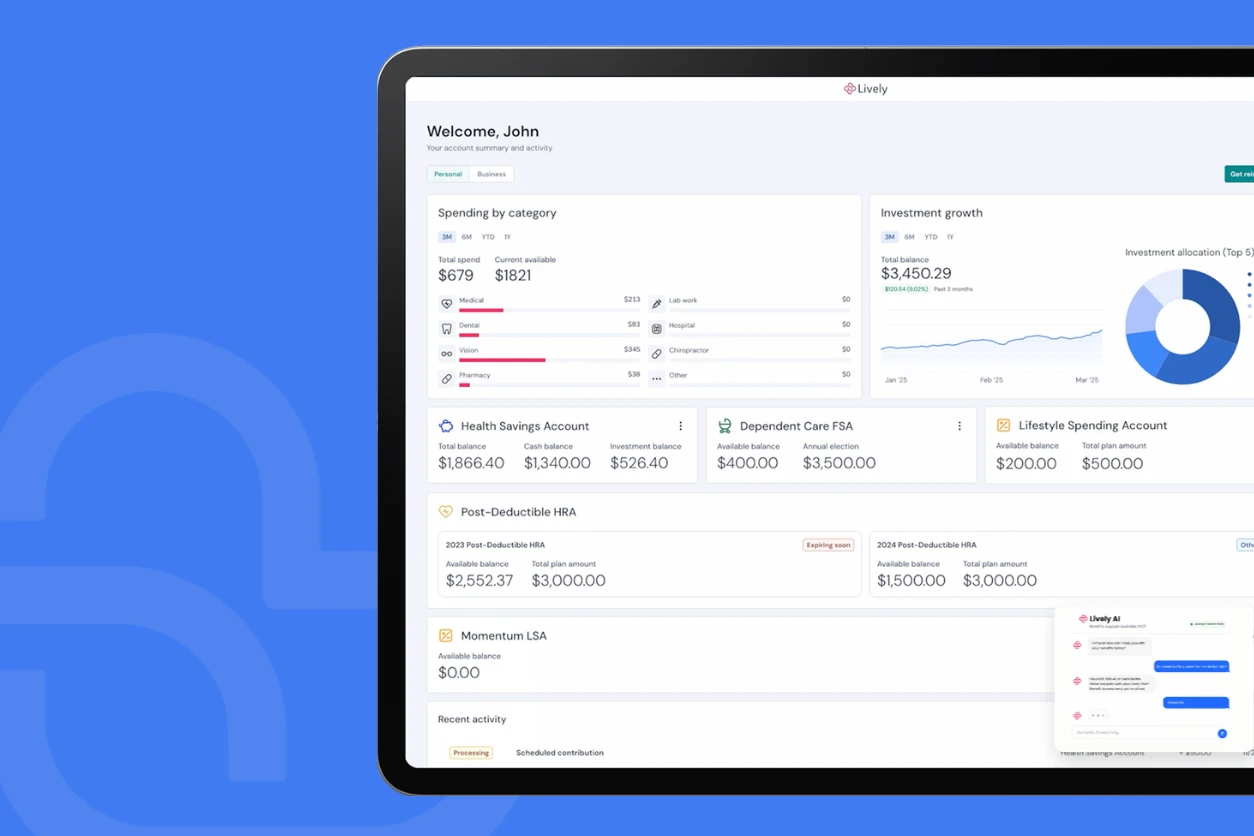
Every benefits platform talks about AI now. But what AI actually does inside a platform, how deeply it is integrated, what context it has access to, and whether it can take action or only answer questions, varies enormously. We wanted to build something where AI was not a layer on top of the experience, but the foundation underneath it.
Before Lively Axis had a name, the question behind it was already the reason Lively existed. Why is the infrastructure behind health benefits so far behind the needs of the people relying on it? HR teams are managing more programs, fielding more questions, navigating more compliance requirements, and trying to make smarter decisions with tools that were never designed for any of it. Employees are making decisions about their health and their money with almost no personalized guidance, then left wondering why the experience feels so impersonal when they actually need to use what they signed up for. That gap between what people need and what the technology delivers is what Lively was founded to close. Lively Axis is how we are doing it.
We did not set out to build AI for the sake of AI. We set out to build a platform where AI could do something genuinely useful, because it sits inside the workflow, understands the full picture, and can help someone take the next right step.
Most platforms have siloed data. Very few have intelligence
Nearly every benefits platform can show you account balances, claim statuses, enrollment numbers, and utilization reports. All of that is useful, but it still puts the entire burden on the person looking at it to figure out what it means and what to do next.
Intelligence works differently. When an employee sees a pending claim, intelligence means they also see why it is pending, what documentation is missing, what the deadline is, and how to fix it. When an employee benefits manager opens a report, the system has already flagged what needs attention and pointed toward a way to prevent it from happening again. Data tells you what happened. Intelligence tells you why it matters and what to do about it.
Three layers of AI, one platform
AI inside Lively Axis is three distinct types of AI, each serving a different purpose, all running on the same connected platform.
Generative AI is the layer most people see first. A member can ask a question in plain language and get an answer that reflects their actual benefits, their actual account, and their actual situation. The same applies for HR team members working through an enrollment issue or trying to make sense of a report.
Predictive AI works more quietly. It watches for patterns, flags anomalies, and identifies problems before they escalate. The same enrollment error that affects one employee usually affects dozens. A claims issue that generates one support ticket often generates fifty. Predictive AI catches those patterns early so the team can address the root cause instead of chasing down every individual symptom.
Agentic AI is where the experience changes the most, because it does not just inform. It acts. It can help a member resolve an account issue, set up a reminder for a contribution deadline, complete a task on their behalf, or walk them through a multi-step workflow. Support is no longer limited to business hours or dependent on how fast someone can get back to you.
These three layers work together because they share the same foundation: the same account data, benefits configuration, employer context, eligibility rules, and claims history. A chatbot knows content, but the Lively AI Agent knows context. It operates inside the platform, so when a member asks a question, the response reflects their specific situation. When an HR admin asks about an enrollment issue, the agent can identify what is actually stuck and what needs to happen to unblock it. And in both cases, the agent does not just explain. It can act: resolving issues, triggering workflows, setting up proactive alerts, and completing tasks on someone's behalf.
Where AI shows up across the Lively Axis platform
AI runs across the entire Lively Axis experience, reducing friction at the moments where benefits typically slow down.
During implementation, AI helps organize the details that make or break a successful launch: plan configurations, eligibility rules, integration timelines, data handoffs. Small misses early in the setup process can create cascading problems for months, so the goal is to catch them before employers go live rather than after.
During enrollment, AI watches for the patterns that create administrative headaches. When the same issue starts appearing across a group of employees, the platform surfaces it, explains the cause, and in some cases resolves it automatically. The north star is to put more of enrollment on autopilot, freeing benefits teams to focus where human judgment actually matters.
In reporting and administration, AI changes how teams interact with their own data. Administrators can ask questions in plain language instead of exporting spreadsheets and hunting for anomalies. Over time, the platform shifts from a system that records what already happened to one that surfaces what needs attention next.
The way we think about it: AI in Lively Axis is an intelligence layer across the platform. Sometimes visible, like a guided answer or support interaction. Sometimes running behind the scenes, helping our teams work faster and more accurately.
What the day-to-day actually feels like
For most HR teams, the daily reality of benefits administration is reactive. A file breaks, an employee emails, a claim gets stuck, an issue bounces through three people before anyone can resolve it. Most of the work is troubleshooting, follow-up, and translation between systems that do not talk to each other.
Lively Axis is designed to change the rhythm. Context-sensitive AI is built into the product, so the help an admin receives is tied to exactly where they are and what they are trying to do. Over time, more and more of the routine administration runs on autopilot, and the admin steps in only where their judgment is genuinely needed.
For employees, Lively Axis makes help available in the moment, in language people understand, based on their specific accounts and situation. The bigger shift is what happens when AI becomes proactive instead of just responsive. Members can ask the AI Agent to watch for things that matter to them, like a balance approaching a threshold or a deadline coming up, and the system reaches out before the person has to remember to check. When direct help is needed, issues that used to require days of back-and-forth can often be resolved in under two minutes.
Benefits should be built around how people actually live
Nobody sits down and thinks, "I need to complete a reimbursement workflow." What they think is, "I just had a baby," or "My kid needs braces," or "I have surgery coming up and I need to figure out how to pay for it." Those are life moments, and they tend to be stressful, personal, and financially significant.
If the platform treats them like isolated transactions, it adds confusion at the exact moment someone needs clarity. Lively Axis is designed to recognize the moment a person is in and guide them through it, bringing the relevant pieces together and pointing them toward the right action. This requires architecture, not just good design. You cannot guide someone through a life moment if the data, workflows, account infrastructure, and decision support tools are all sitting in separate systems.
A system that gets smarter over time
Lively Axis is a learning system. User behavior signals where friction lives. Outcome data tells us whether the AI actually helped someone complete what they were trying to do. Human oversight keeps things honest, because benefits are too consequential to hand over to a black box. And the platform itself learns from patterns across enrollment, account activity, support, reporting, and claims because all of that data is connected.
There is also AI that most people never see. Internally, we use AI Agents across our own operations. When our member services team encounters an unusual situation, AI can surface direct answers from our system with compliance guardrails already built in. On the member side, AI extends support beyond business hours through our AI-powered IVR, so members can check the status of a transfer, order a new card, or handle routine tasks even when a team member is not available. Customers feel the impact through faster answers, fewer handoffs, and more consistent outcomes, even if they never interact with the internal AI directly.
What AI-First actually means in a regulated space
When I say Lively Axis is AI-first, I mean we start every product decision with a specific question: what should the user no longer have to do manually?
Building this way in healthcare and financial benefits is genuinely hard. Sensitive financial accounts, healthcare-related decisions, compliance obligations, employer-specific rules. There is no room for AI to guess or overstep on something that affects someone's money or their access to care. So we invest heavily in boundaries: what the AI can handle on its own, what needs confirmation, what gets escalated, and what stays with a human. Those guardrails are not constraints on the AI. They are what makes the AI trustworthy.
We are not trying to replace trust with automation. We are trying to use automation to build a more trusted experience.
What Becomes Possible When Everything Connects
The vision behind Lively Axis extends beyond any single feature. Most HR teams today are stitching together information from payroll, eligibility, enrollment, account activity, reporting, support, and vendor systems that were never meant to share context. When those systems connect through a single intelligent platform, employers can manage benefits proactively, spot trends, catch issues early, and automate the work that currently eats up their week. Employees can get guidance that reflects their full picture without needing to understand how the backend is organized.
Connected systems also make every AI capability more powerful. The generative answers get more specific. The predictive patterns get more accurate. The agentic actions can reach further. The more connected the platform, the more intelligent the experience becomes.
Why this matters
A question about an account balance might look like a small thing from a product perspective, but for the person asking, it could be the difference between paying for a prescription this week or putting it off. An enrollment decision is not a workflow. It is a financial and healthcare choice that affects someone's family for an entire year. A denied claim is not a data point. It is stress.
Lively Axis was built to close the gap between what people need from their benefits and what the experience actually delivers. A platform where AI is the foundation, not a feature. Where the system helps people act on information instead of just holding it. Where benefits work the way they were always supposed to.
We are just getting started.

Benefits
2026 Maximum HSA Contribution Limits
Lively · February 1, 2025 · 2 min read
For 2026, the HSA contribution limits are $4,400 for individual coverage and $8,750 for family coverage. These limits increased from 2025, when the caps were $4,300 and $8,550. If you’re age 55 or older, you can still contribute an additional $1,000 as a catch-up contribution.

Benefits
What is the Difference Between a Flexible Spending Account and a Health Savings Account?
Lauren Hargrave · February 9, 2024 · 12 min read
A Health Savings Account (HSA) and Healthcare Flexible Spending Account (FSA) provide up to 30% savings on out-of-pocket healthcare expenses. That’s good news. Except you can’t contribute to an HSA and Healthcare FSA at the same time. So what if your employer offers both benefits? How do you choose which account type is best for you? Let’s explore the advantages of each to help you decide which wins in HSA vs FSA.

Health Savings Accounts
Ways Health Savings Account Matching Benefits Employers
Lauren Hargrave · October 13, 2023 · 7 min read
Employers need employees to adopt and engage with their benefits and one way to encourage employees to adopt and contribute to (i.e. engage with) an HSA, is for employers to match employees’ contributions.
Benefits
2026 Maximum HSA Contribution Limits
Lively · February 1, 2025 · 2 min read
For 2026, the HSA contribution limits are $4,400 for individual coverage and $8,750 for family coverage. These limits increased from 2025, when the caps were $4,300 and $8,550. If you’re age 55 or older, you can still contribute an additional $1,000 as a catch-up contribution.
Benefits
What is the Difference Between a Flexible Spending Account and a Health Savings Account?
Lauren Hargrave · February 9, 2024 · 12 min read
A Health Savings Account (HSA) and Healthcare Flexible Spending Account (FSA) provide up to 30% savings on out-of-pocket healthcare expenses. That’s good news. Except you can’t contribute to an HSA and Healthcare FSA at the same time. So what if your employer offers both benefits? How do you choose which account type is best for you? Let’s explore the advantages of each to help you decide which wins in HSA vs FSA.
Health Savings Accounts
Ways Health Savings Account Matching Benefits Employers
Lauren Hargrave · October 13, 2023 · 7 min read
Employers need employees to adopt and engage with their benefits and one way to encourage employees to adopt and contribute to (i.e. engage with) an HSA, is for employers to match employees’ contributions.
SIGN UP FOR OUR
Newsletter
Stay up to date on the latest news delivered straight to your inbox